
Why Every Director Should Watch Heated Rivalry: 3 Lessons in Craft and Commitment
I don’t jump on bandwagons very often, but I am fully on board with Heated Rivalry, the small-budget Canadian queer hockey romance show that is enjoying an explosion of attention. I’m not going to spend a lot of time explaining the show or commenting on its meteoric rise; there are plenty of other articles that do that. What I do want to do is talk about the ways in which the directing and acting have contributed to the success of the show.
As a theatrical director and producer, there are a lot of differences between the medium I work in and the medium of film/TV, but we can still learn a lot from each other. And over the course of watching/reading interviews with creator/writer/director Jacob Tierney and the cast, there are some really important things that I’m seeing that I want to highlight when it comes to our craft as storytellers.
A quick note about “craft:” this is just another word for skill or technique. Some folks think it’s pretentious, but my decades of experience have taught me that craft is what’s there when talent fails us. A lot of successful actors and directors get by on natural abilities, but the reality is that we all have times when our talent fails us. Viewing what we do as a craft requires intentional development and practice, even when (and perhaps especially when) we are naturally gifted at something. It’s actually something that the two main characters in Heated Rivalry understand: their ability to play hockey well is their craft, and their dedication to that craft is part of what draws them together.
So here are three important lessons about our craft that I took away from the show.
Lesson One: Specificity Is Truth
Jacob Tierney has said in interviews that he wanted to take the material seriously. It’s a sexy/spicy romance novel that many people would likely have discounted, or given the same treatment as something like Fifty Shades of Grey got (the last big book-to-movie adaptation of spicy romance I can think of). Instead, Jacob wrote an incredibly faithful adaptation of the book that didn’t discount the sex, but also didn’t limit the series to being about that. He was incredibly specific about the core of the story that the book and now the show tells: the story of two people falling deeply in love with each other despite circumstances that should have prevented that from ever happening, and more importantly, choosing each other over and over again.
I refer to the central theme of a story as its “seed,” and as directors it is essential that we know what it is and are able to clearly communicate it to our production team and cast. Lack of specificity around a story’s seed is perhaps the most common pollutant behind artistic flops (not to be confused with commercial flops).
Specificity is also crucial in the way that we collaborate with our production team and actors. Jacob is highly specific about music and the way that sound design plays into his work, and it’s clear watching the show that he sees music as having a very particular purpose in telling the story. Thus, the absence of music through much of the final episode is just as compelling as its presence throughout the prior 5 episodes. Similarly, the choice of lenses, lighting, and color grading are all very specifically chosen to give the show a cinematic feel, very different from a show like, say, Schitt’s Creek or Jacob’s show Letterkenney. All of that is driven by a specificity of the seed.
Specificity also applies to the intimacy in the show. We’ll save the discussion about whether there “needed” to be “that much” intimacy shown on screen for later (I am firmly on the pro side, to be clear), and instead talk about why specificity in the intimacy is so important. As an intimacy director (when I’m not directing), one of the first questions I ask a director and cast is about the story that any particular moment of intimacy is telling, and Heated Rivalry’s intimacy scenes do a LOT of storytelling. They’re sexy and hot, yes, but they also offer us a glimpse into who these people are in a way that a lot of other sex on TV or in film doesn’t. There’s even one scene in where both characters, nude and in the middle of sex, have a full conversation about whether “this is real.” That same conversation could have happened with them clothed on the couch, but for these characters in this story, the enjoyment they get from giving each other pleasure is crucial to understanding their relationship. The choreography and structure to these moments is filled with specificity, which is why they feel so human and connected while also being steamy and hot.
But perhaps the most powerful display of specificity is in the acting. Connor Storrie, who plays Ilya, has made headlines about learning Russian for the part, which is impressive, but not more or less than any other part of their incredible performances. There is a lot of discussion online about the “microexpressions” that allow you to understand what’s going through the minds of the characters at any given moment, and microexpressions are the result of specificity. They happen when an actor is fully present in a character, not worrying about lines or how they look or sound, and when they are thinking the characters thoughts, not just saying the lines. These are reactions not only to what their scene partner is doing, but to the character’s own thoughts.
Specificity in acting is not only the purview of the actor, however, it’s also crucial that a director understand what it is and what it needs so that when it’s not happening, we can guide actors back to it. This is part of why Deconstructing Directing exists, because there is almost no training that exists for directors about how to identify and nurture specificity in acting. Act 6 (which will release later this year) will be all about working with actors, but if there’s interest I’ll release some content sooner, so let me know in the comments if you want a breakdown of the methods I have used for 10 years to nurture specificity when working with actors.
Specificity is where truth is found. And especially right now, the world is hungry for truth.
Lesson Two: Specificity Over Stunt Casting
The "downstream" (Broadway, high-budget regional theatre, etc) is obsessed with "names" to mitigate financial risk. But Heated Rivalry demonstrates that if you cast for energy and specificity rather than fame, the audience will find you. The fact that Hudson and Connor were almost completely unknown before this show speaks to the commitment that Jacob and his casting team had to finding the right people for the role, regardless of their level of experience and exposure.
As directors, we have to look for what’s working in the room; not what we wish was working, not what we hope was working, but what is actually working. Even in upstream spaces like community and educational theatre where we don’t always have options, it’s crucial to find that point of connection. I can speak from experience when I say that when we cast because we think we have no other choice or “for the buzz” that a name might bring, it is a slow-acting poison for a production.
That said, sometimes you have to take a chance on someone because it works so well. The casting team has spoken about the fact that they looked for Eastern European actors, German actors, and others due to the language needs, and so Connor not knowing Russian at the time might have given them pause. But ultimately Jacob cast him because he saw the specificity he was offering in the audition process and trusted the energy that Hudson was getting from Connor.
Lesson Three: People Over Spectacle
6 episodes, a $3.1 million budget, and shot over 37 days. This was not a high-budget show, but it is a masterclass in resource management. When we prioritize paying your people well and then trust them to find creative solutions (like using the same club from different angles and with different lighting to represent both Russia and Montreal) the result is almost always better than an expensive set piece. In the theatre we often short our people to pay for spectacle, and that is a failure of leadership. Commitment to the story and the people telling it will always outweigh the dollar amount on the screen.
Brene Brown, the speaker, author, and researcher, talks about the opposite of belonging being “fitting in.” Fitting in means shaping ourselves to resemble what we think other people want, which ultimately isn’t true to who we are. Belonging, on the other hand, never asks us to change who we are. I mention this here, because spectacle and big budgets are often an attempt by artists to shape the story based on what we think other people will want to see. And yes, when we are selling a product we do need to think about our audiences and what they need and want, but spectacle and big budgets that get in the way of authenticity and connection, that dilute the specificity of the story and the reason we are sharing it…that’s a form of us trying to “fit in” rather than looking for belonging.
Heated Rivalry is a story about two men who learn to stop trying to “fit in” with each other and instead simply belong, who keep choosing belonging even when the world around them tells them that they can’t/shouldn’t. It’s no surprise that this story resonates right now at a time when belonging feels impossible to many. As directors, we have the opportunity to shape rooms, processes, and even final products to center belonging rather than “fitting in” and it starts with taking care of our people, even if that means we have to get creative with our budget.
Which of these resonated most with you? Any other observations you want to share? Drop a comment!
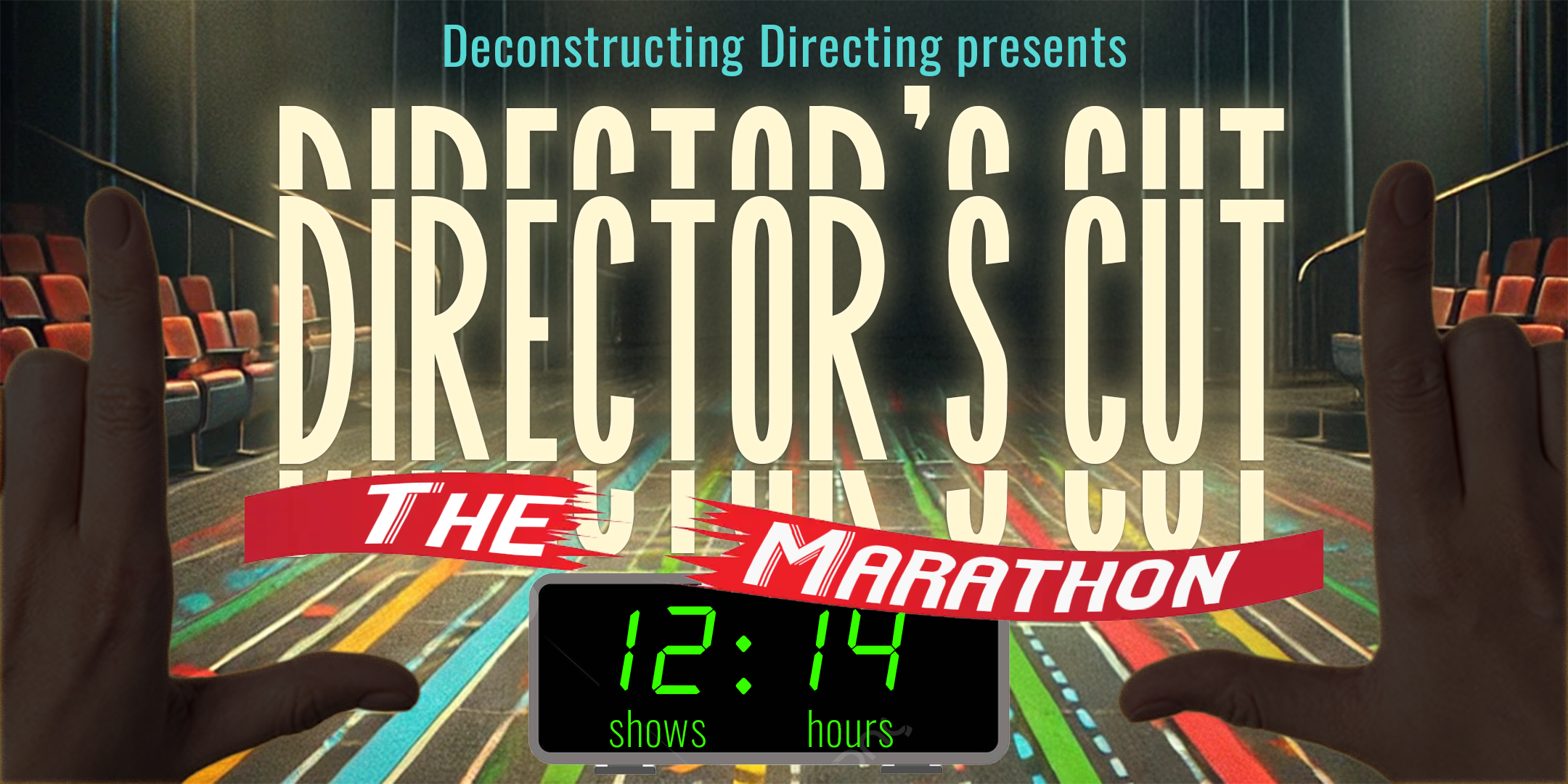
If you want to see me put my money where my mouth is, I am attempting the world’s first-ever directing marathon, directing 12 scenes back to back over 14 hours, live in person in Houston and also streaming online to anywhere in the world. Come see me work with more than 25 incredible actors and display the power of reckless kindness and specificity in directing!
If you are looking for ways to level up your craft as a director, check out the rest of Deconstructing Directing. The Library is 100% free and always will be!
And if you want to support this work and get some fun extra perks…
Thanks for reading, and until next time, I challenge us all to be recklessly kind. :-)